
WHEN TO GO
Best Time to Visit Galapagos: Weather, Wildlife & Island Travel
Choose your dates around the experiences you want—and the time you will spend on the water.

THE SHORT ANSWER
For a land-based trip focused on warmer water and generally calmer sea conditions, start by considering January through April. If your dates fall later in the year, adapt the number of boat transfers and the balance of water and land activities. Galapagos can be visited year-round; there is no single best month for every traveler.
What changes between the seasons?
Ocean conditions are particularly relevant when your trip includes day boats and moves between hotel bases. A weather chart helps set expectations, but it does not predict a particular crossing or snorkeling session.
| Period | General pattern | What to consider for your trip |
|---|---|---|
| January–April | Warmer water; generally calmer seas; seasonal rain | Consider this window if water comfort is a priority. Leave room for shade and breaks during land activities. |
| May | A transition toward cooler conditions | Plan for a mix rather than treating the month as a guaranteed combination of both seasons. |
| June–September | Cooler water and a tendency toward choppier seas | Look closely at the number of crossings and the equipment provided for water activities. |
| October–December | Cool-season conditions moving toward the next seasonal transition | Pack for changing conditions and check the plan for your specific dates. |
Seasonal context: Galapagos Conservation Trust’s climate and wildlife guide. The trip-planning suggestions are our interpretation of those seasonal patterns.
The useful decision is how to organize your days. A traveler who enjoys long water excursions may make a different choice from a family looking for short activities and time near the hotel. Neither needs to fit a generic “perfect month.”
When is the best time to visit Galapagos for snorkeling?
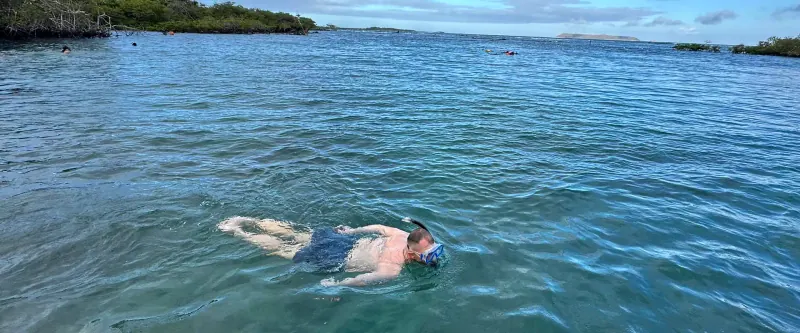
Start with January through April if warmer water and generally calmer conditions are your priorities. Snorkeling is possible in other months too, but cooler water, the chosen site and the conditions on the day affect comfort. Compare specific outings in our snorkeling guide before fixing your dates.
Plan the boat days alongside the water sessions
For each proposed excursion, ask how much of the day is travel, how people enter the water and whether snorkeling is optional. A photograph of a sheltered bay does not describe the crossing needed to reach it. Ask about wetsuit availability and fit before confirming an activity, especially if someone in your party gets cold easily.
Keep island transfers separate from full sightseeing days. Passenger-boat crossings can take around two to three hours depending on sea conditions, according to Galapagos National Park’s transport information. Getting to the port, boarding and checking into the next hotel take additional time.
Our suggested seven-day Santa Cruz and Isabela journey is a starting point for discussing two bases. If you prefer fewer moves, we can discuss extra nights in one place. Land-based travel means sleeping ashore; it does not necessarily mean avoiding boats.
Working around school holidays
If your dates are fixed, start with them. Trying to move an entire family holiday to match a weather chart may be less useful than designing a realistic itinerary within your available week. Tell us which dates are firm and whether your stated trip length includes the journey from home.
Room arrangements are worth settling early: one family room, connecting rooms and two separate rooms are different requests. Galapagos Conservancy identifies mid-June to early September and mid-December to mid-January as busy periods and recommends arranging travel ahead. Read its trip-planning guidance.
Our guide to Galapagos with kids explains how to balance ages, water confidence and downtime. A family with experienced teenage swimmers may want a very different week from one traveling with younger children.
Match the season to an experience
For a hotel-based journey, use the seasonal calendar to choose a few priorities rather than fill every day. These examples come from the GCT seasonal guide linked above; access and wildlife behavior can vary.
| Window | Wildlife context | How to use it |
|---|---|---|
| February | Frigatebird courtship on North Seymour | Consider an available guided day excursion from Santa Cruz. |
| May | Blue-footed booby courtship on North Seymour | Give a Santa Cruz day trip room in the itinerary. |
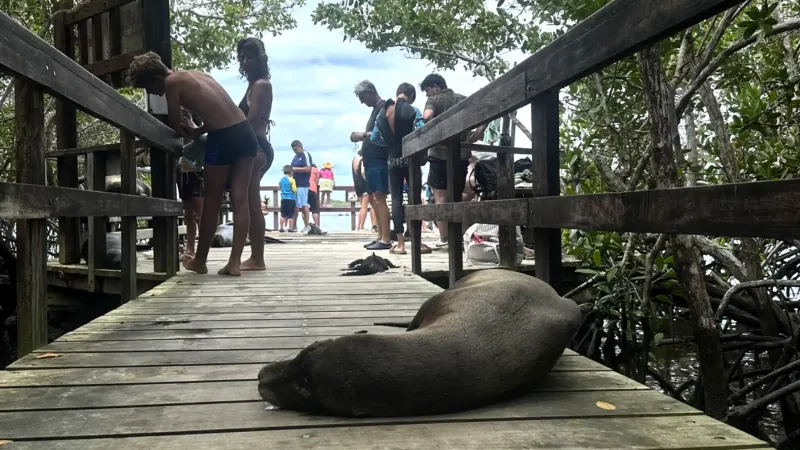
| August–November | Sea lion pupping season | Include coastal observation with generous distance from animals. |
| December | Transition toward warmer conditions | Balance land activities and water outings; do not expect a fixed changeover date. |
These are seasonal possibilities, not an included wildlife checklist. Your confirmed excursion determines the site you visit. For choosing individual water outings, use our snorkeling comparison.
Choose wildlife priorities with the route in mind
Use our island activity guide to choose the wildlife experiences that matter most to you, then ask whether they fit the islands and services in your proposal. A seasonal wildlife calendar covers the whole archipelago; your hotel itinerary covers a particular set of accessible sites.
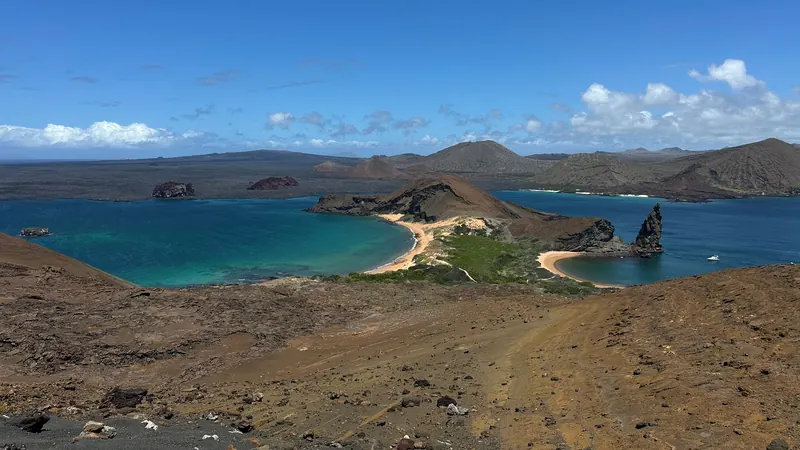
Do not add an island solely because a photo promises one animal. Ask what else you would enjoy there if that sighting does not happen. This makes the trip worthwhile for its landscapes, walks and overall experience, rather than dependent on a single encounter.
The National Park manages authorized visitor sites and the activities allowed at them. Tailor-made planning works within those arrangements, rather than opening access to any place on request. See official visitor-site information.
A practical way to choose your travel window
- Set your constraints. Write down school holidays, leave from work and the maximum time away.
- Rank your priorities. Water comfort, wildlife interests, walking and quiet hotel time rarely deserve exactly equal weight.
- Choose a manageable route. Compare island bases before adding transfers.
- Compare two proposals if you are flexible. Use the same hotel level and excursion preferences so the date comparison is meaningful.
If you are still deciding between five, seven and eight days, start with our trip-length comparison. The number of usable days can have as much impact on your enjoyment as the month.
Before you decide
Is there a month when Galapagos is closed?
The islands are a year-round destination. Individual sites, excursions and transport services can be affected by conditions, conservation decisions and availability. Check the actual route for your dates.
Can I island-hop in July or August?
Yes, subject to available services and conditions. If boat comfort is a concern, discuss fewer island changes and leave space around transfer days rather than filling every day with a long excursion.
Is the warm season always the best for snorkeling?
Warmer water can make a difference to your comfort, but the suitability of a session also depends on currents, visibility, entry points, equipment and your experience. Choose the excursion as carefully as the month.
Which months tend to have calmer seas?
January through April is a useful starting window for generally calmer conditions. No month guarantees a smooth crossing. If boat comfort matters, compare fewer island transfers and the length of individual outings as well as your travel dates.
Should I choose dates before asking for a quote?
A preferred month or two possible date windows is enough to begin. If school holidays fix your dates, tell us that too; the route can be designed around the time you have.
YOUR NEXT STEP
Find the dates that fit your journey.
Share your dates, travelers and budget per person. We will use your preferences to prepare a personal proposal. Your itinerary remains adjustable before confirmation, subject to availability.
Request my tailored itinerary